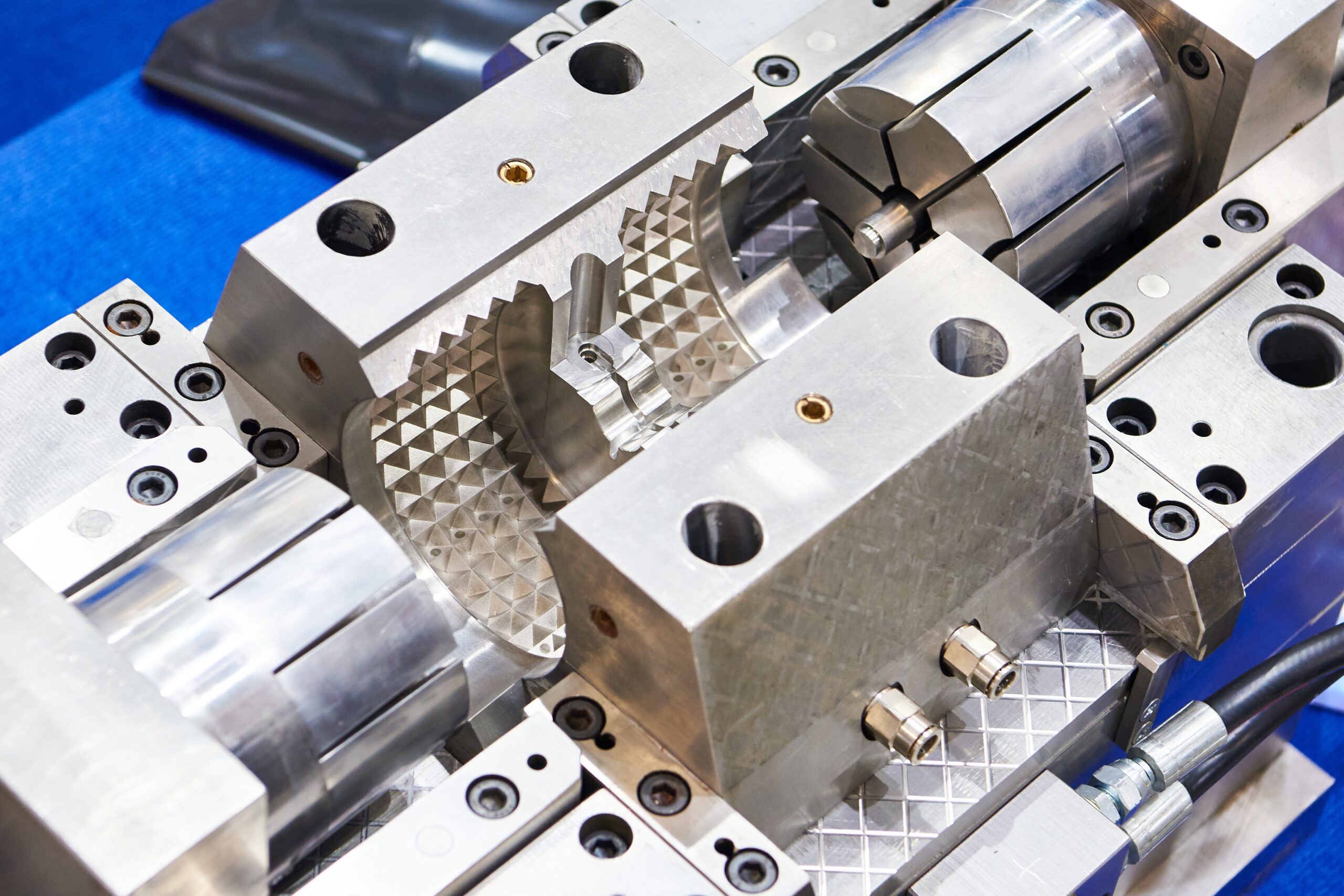
Design for manufacturability, or DFM, plays a critical role in successful injection molding projects. Even well-engineered parts can encounter production delays, quality issues, or unnecessary tooling costs when manufacturability considerations are introduced too late in the process.
For engineers developing plastic components, DFM injection molding helps bridge the gap between part functionality and efficient production. A thoughtful DFM approach improves moldability, supports dimensional consistency, reduces scrap, and shortens time to market.
What Is DFM in Injection Molding?
Effective DFM ensures the part can be produced consistently at scale while meeting performance, cosmetic, and dimensional requirements.
When teams apply DFM principles early in development, they often avoid expensive tooling revisions and production inefficiencies later in the program lifecycle.
DFM analysis typically evaluates:
- Part geometry
- Material selection
- Wall thickness
- Draft angles
- Cooling behavior
- Tool complexity
- Tolerances
- Assembly considerations
Core DFM Injection Molding Guidelines
While every application has unique requirements, several foundational design principles apply across most injection molding projects.
Maintain Consistent Wall Thickness
Uniform wall thickness is one of the most important principles in injection molded part design. Consistent wall thickness improves cycle efficiency by reducing cooling time, which directly impacts production throughput.
When wall sections vary significantly, plastic cools unevenly inside the mold. This often creates internal stresses, sink marks, or warping.
Engineers should aim for gradual transitions between wall sections whenever possible.
| Design Consideration | Recommended Approach |
| Thick-to-thin transitions | Use gradual tapers |
| Rib thickness | 40–60% of adjacent wall |
| Corner transitions | Add generous radii |
| Large solid sections | Core out material |
Include Proper Draft Angles
Draft angles allow molded parts to release cleanly from the tool. The optimal draft angle depends on material type, surface finish requirements, and part geometry.
Without a sufficient draft, parts may drag against mold surfaces during ejection, increasing the risk of cosmetic defects, part distortion, or tooling damage.
General draft recommendations include:
- 1–2 degrees minimum on vertical walls
- Additional draft for textured surfaces
- Greater draft on deep features
Design Ribs and Bosses Carefully
Ribs and bosses improve structural performance without increasing overall wall thickness. However, oversized features can create sink marks and molding inconsistencies.
These features should strengthen the component while maintaining predictable material flow and cooling behavior.
Best practices include:
- Keeping rib thickness below adjacent wall thickness
- Using radii at rib intersections
- Maintaining proper spacing between ribs
- Supporting bosses with gussets when needed
Avoid Sharp Corners
Sharp internal corners create stress concentrations and restrict material flow during molding. Instead, rounded transitions also reduce the likelihood of cracking in high-stress applications.
Adding radii improves:
- Structural integrity
- Mold filling consistency
- Resin flow
- Tool longevity
Consider Material Shrinkage
All thermoplastics shrink as they cool after injection.
Material shrinkage affects dimensional accuracy and must be accounted for during tooling design. Different resins exhibit different shrink rates based on filler content, crystallinity, and processing conditions.
Teams should evaluate:
- Tight tolerance requirements
- Assembly interfaces
- Flatness specifications
- Long unsupported spans
Material Selection and DFM Performance
Material choice directly impacts manufacturability. For example, glass-filled materials provide improved stiffness but may increase wear on tooling and require adjusted draft angles.
Some resins flow easily into complex geometries, while others require larger gates, higher injection pressures, or modified wall designs.
Balancing performance requirements with manufacturability is a key part of successful DFM injection molding.
When evaluating materials, engineers should consider:
- Mechanical performance
- Chemical resistance
- Heat resistance
- UV exposure
- Regulatory requirements
- Cosmetic expectations
- Moldability characteristics
Tooling Considerations During DFM Analysis
Part geometry heavily influences mold complexity and tooling cost. In some cases, small design adjustments can eliminate the need for secondary tooling actions and significantly reduce mold costs.
Features that increase tooling complexity include:
- Undercuts
- Side actions
- Lifters
- Deep ribs
- Tight shutoffs
- Complex textures
Example of DFM Impact on Tool Complexity
DFM reviews help identify opportunities to simplify tooling while preserving functional requirements.
| Feature | Potential Manufacturing Impact |
| Undercuts | Requires side actions or lifters |
| Deep narrow ribs | Difficult filling and cooling |
| Tight tolerances | Increased tooling precision |
| Cosmetic surfaces | Enhanced polishing requirements |
| Large flat surfaces | Higher warpage risk |
Tolerancing for Injection Molded Components
Not every dimension requires precision machining tolerances. Teams should identify which dimensions are truly critical to part function and assembly performance.
Collaborating with an experienced injection molding partner helps establish achievable tolerances based on geometry, material, and production volume.
A practical tolerance strategy improves manufacturability by:
- Reducing scrap rates
- Improving process stability
- Lowering inspection burden
- Extending mold life
Partner With Mako Plastics for DFM Injection Molding Expertise
Successful injection molding projects begin with strong design collaboration. At Mako Plastics, our team works closely with engineers to evaluate manufacturability early, optimize part performance, and support efficient production outcomes.
From material selection to tooling strategy, we help customers navigate the critical decisions that influence quality, cost, and scalability: Explore Mako Plastics Capabilities